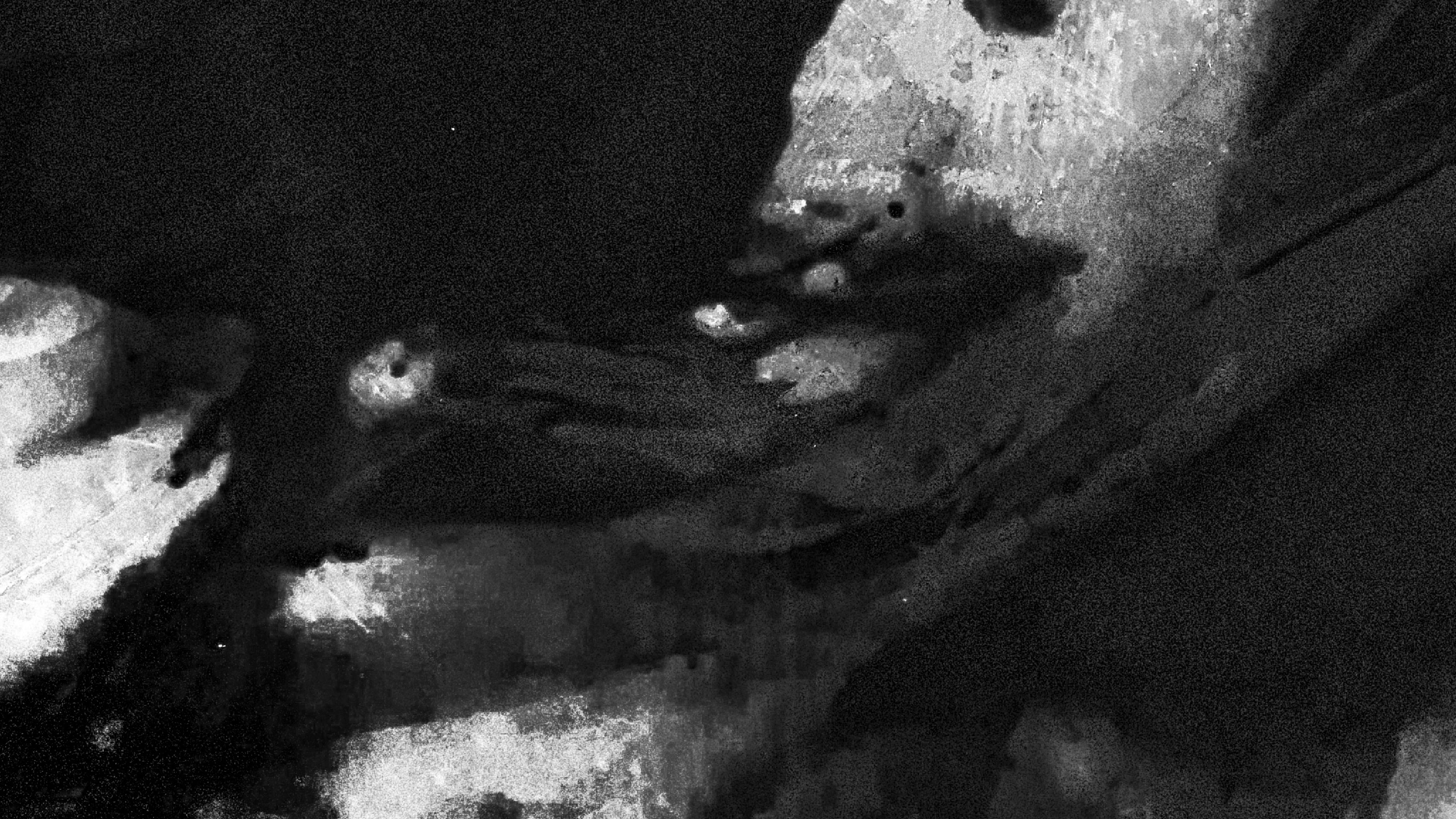
Collapse as control
Artists like Laura Kitamura and Theo Levers are building entire shows around corrupted files. Still frames that smear like melted paint. JPEGs that glitch with ghost hues. What used to be tech error is now visual signature. In these works, failure isn’t a bug—it’s the point.
Digital decay becomes the new brushstroke.
Noise as narrative
There’s storytelling inside these distortions. The noise holds history: old renders, lost codecs, broadcast errors. When you see compression fuzz or scanline drag, you're seeing process—an image aging in real-time. Works like Packet Loss by artist duo DC/Overflow read like haunted memory fragments, not clean design.
Ghosts in the data
This aesthetic overlaps with hauntology. There’s a nostalgia to glitch—the kind of beauty you only notice when something breaks. Artists often source from outdated technology: MiniDV, VHS, low-bitrate webcams. Not to mimic the past, but to corrupt it anew.
Grain becomes a ghost. Collapse, a kind of resurrection.
Final thoughts
The collapse is no longer something to fix—it’s something to shape. In a world of pristine design and HD clarity, grain worship offers an alternative: beauty that frays, glitches that speak, pixels that remember too much. And that might be exactly what we need.


