Sky Mirror Diaries: Visual Culture’s Obsession with the Disembodied Gaze

Visual

·

May 29, 2028

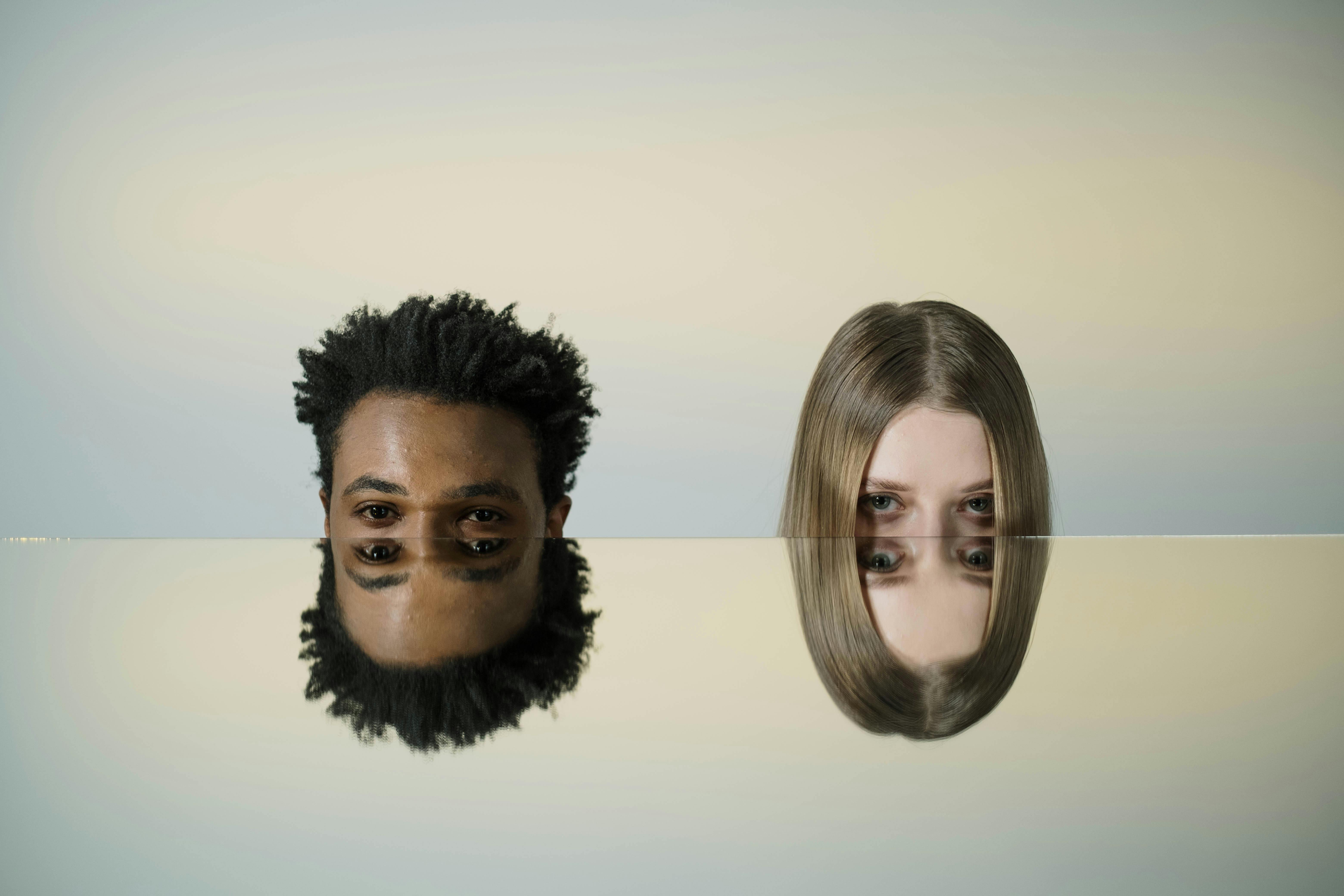
Two people facing forward with their eyes just above a mirror, creating a symmetrical reflection of their faces below

Intro

What happens when the subject disappears—and all that’s left is what they saw? The rise of reflective imagery in visual art points to something deeper than aesthetics. It’s a fascination with perception itself. In this essay, we look at artists using mirrors, sky frames, and faceless figures to explore the disembodied gaze—a way of seeing that places the viewer inside the subject’s void.

Face out, world in


Contemporary photographers like Selina Marsh and Yuri Baretto have popularized the use of mirrors as faces—literal gaps where identity should be. The viewer fills the void. In Marsh’s “Sky Mouth” series, mirrors held up to the sky become stand-ins for heads, suggesting consciousness as clouded, volatile, and open-ended.


The message is clear: identity is reflection, not fixture.


The void as lens


This aesthetic borrows from surrealism but points toward something more digital. In an era of avatar filters and online projection, the “self” is increasingly outsourced. Artists are responding with imagery that removes the person but amplifies the gaze. The viewer is implicated, distorted, reflected.

We don’t see the subject—we become them.


Dreams without anchors


Visual journals, glitch collages, and outdoor installation art are all playing with this gaze. The subject is absent, but their viewpoint remains. The sky is looking back. The mirror is remembering for them. Artists like Eko Nunez and Mira Zeit have turned this into practice—building work where presence is defined by what’s left behind.


Final thoughts


In this new visual language, absence isn’t void—it’s presence restructured. The mirror becomes a portal, the sky a diary. The viewer doesn’t just witness the image—they finish it.